
The Food Gold Rush Nobody’s Talking About
When most people, at least the average Ghanaian youth, think of agriculture, what comes to mind is the familiar image of an old farmer with a hoe, sweating under the sun in not-too-clean clothes, bent over rows of crops or raising mounds on a patch of land. It is not exactly the picture of modern opportunity.
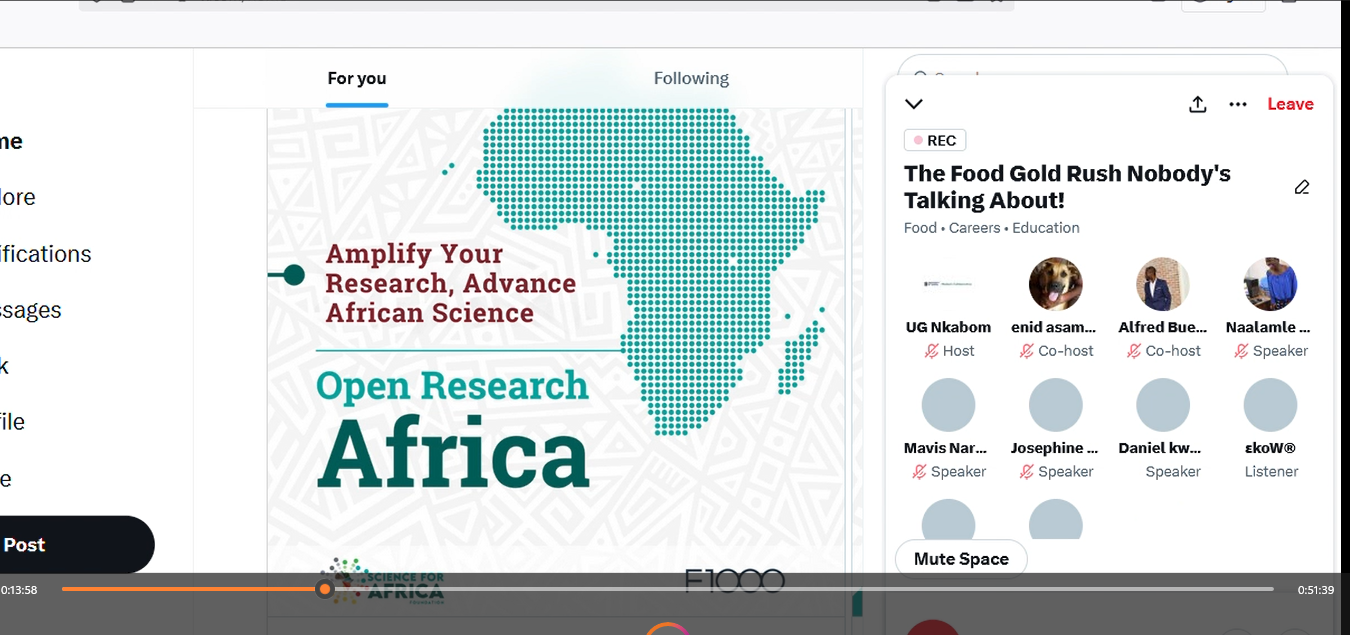
But that image was turned on its head when UG Nkabom hosted the second edition of its X-Spaces conversation, themed “The Food Gold Rush Nobody’s Talking About.” The session, held as part of activities to commemorate Africa Food Security and Nutrition Day, spotlighted the future of food through the eyes of Ghana’s youth; those redefining agriculture as innovation, technology, and business.
“Food isn’t just what we eat,” noted a post-doctoral fellow, Dr. Alfred Buernor, who spoke on behalf of the leadership of the Nkabom Collaborative. “It’s power, potential, and opportunity.”
That statement set the tone for a lively, one-hour conversation moderated by a managing partner at Trolley Market, Daniel Kwame Appiah Asare and featuring three remarkable voices: Dr. Naalamle Amissah, horticulture lecturer at the University of Ghana; Emmanuel Twene, agri-preneur and founder of QET Organic Farms Ltd; and Josephine Toudeka, the student-entrepreneur behind Toudeka Enterprise, known for her high-quality palm oil and palm soup base products. Interesting insights emerged from the discussion.
Innovation – the Game Changer
The discussion began with a call to rethink agriculture. The panelists highlighted how digital tools like AI, Internet of Things (IoT), and mobile apps are redefining food systems.
For Dr. Naalamle Amissah, horticulture is no longer just about planting crops but about applying science, technology, and creativity. She described how her team developed PlantID, a mobile app that uses artificial intelligence to identify plant pest species in real time. “Agriculture is about problem-solving,” she emphasised. “Once you can spot a challenge, you can create a solution. And that’s where opportunity lives.”
Emmanuel Twene shared a complementary perspective. He explained how his company integrates Internet of Things (IoT) systems into mushroom and snail farming to track humidity, temperature, and growth rates remotely, reducing losses and improving yields. “Farming is no longer about guesswork,” he noted. “With data, you can predict, plan, and profit.”
Drawing on what her experience, Josephine Toudeka, argued that innovation wasn’t about inventing something new, but reimagining what already exists. She shared how she took over her mother’s small palm oil business and began modernising it byimproving the packaging, ensuring quality consistency, and securing FDA certification. “Agriculture isn’t only about the farm,” she said. “It’s about what you do with what comes from it; how you turn it into something people trust and value.”
Adding Value — Creating Wealth
A key to mining the food gold is value addition. People will pay for value if it meets their needs. And this is the secret Emmanuel discovered. His business now processes fruits and vegetables into snacks like dried mango, pineapple chips, and mushroom cookies. Not only does this extend the shelf life of his products and give the farmer opportunity for good pricing, it also ensures that the benefits at different points of the value chain can be leveraged. “Agriculture is not just farming; it’s an entire ecosystem,” he noted. “We all have a role to play’ from production to processing to marketing.”
Their stories struck a chord with the audience. One listener tweeted:
“Hearing young entrepreneurs talk about processing and branding local produce makes you realise [that] the gold in agriculture isn’t under the ground, it’s in our hands.”
Another listener added that the government’s efforts could do more to promote such youth-led agribusinesses. “We need policies that help brands like those represented in the conversation [to] scale [up], not just survive.”
Sustainability: The New Currency
If the youth-led food revolution is Ghana’s new gold rush, then sustainability is the currency that determines its true worth. To fully tap into the promise of this “food gold,” agri-preneurs must see their ventures not as quick gains, but as enduring enterprises built on trust and responsibility. For this new crop of agri-preneurs, sustainability was non-negotiable
“You know that there have been instances where adulterated palm-oil has been detected in our markets.,’’ noted Josephine, “and it’s the reason I strive to create a brand that people can trust.” “When people know your food is safe, that’s when you build a real, lasting business.”
The founder of QET Organics, however, viewed sustainability as legacy. “I want to build a sustainable business that generations yet unborn will come and meet,” he observed. “It’s also the reason I train women and persons with disabilities to be part of the value chain.”
From an academic’s perspective, Dr. Naalamle Amissah saw sustainability as empowerment. “Confidence comes when you can do it yourself,” she summed up aptly.
The Mindset Shift
As the conversation drew on, the focus turned, resoundingly, to the personal; the mindset behind success.
“The size of your farm doesn’t determine your success; your mindset does,” the moderator echoed. “Agriculture rewards those who see possibilities, not limitations.”
Listeners responded enthusiastically, with one remarking:
“Mindset is the real fertiliser — without it, nothing grows.”
For many young participants, this was the takeaway that lingered - that agribusiness is not about where you start, but how you think, learn, and adapt.
Charting the Future
By the end of the session, there was a shared sense of optimism and conviction. Ghana’s youth were not just listening; they were ready to act.
Through initiatives like UG Nkabom X-Spaces, which will be held quarterly, the Collaborative is doing more than sparking dialogue. It’s building a movement; A community of thinkers, innovators, and changemakers reimagining what Ghana’s agrifood systems can look like when youth take the lead.